A Moment of Peace : Bali Community Choir at the GWK Bali Bomb Memorial 2012
By early morning, the stone terraces of the GWK Lotus Pond were already filling with people.
Families arrived carrying framed photographs and folded ceremony programs. Survivors embraced quietly near the entrance gates. Security officers and local pecalang guided guests through the complex while soft gamelan music drifted through the open-air venue beneath an overcast Bali sky.
Ten years after the Bali bombings, nearly 3,000 people gathered at Garuda Wisnu Kencana to remember the 202 lives lost in the attacks of 12 October 2002.
The setting itself shaped the atmosphere of the morning. Surrounded by towering limestone walls and seated beneath the unfinished Garuda statue, survivors, diplomats, Balinese families, international visitors, religious leaders, and government representatives shared the same stone amphitheater in silence.
Despite the scale of the event, the mood felt deeply personal.
A Morning Carried with Care
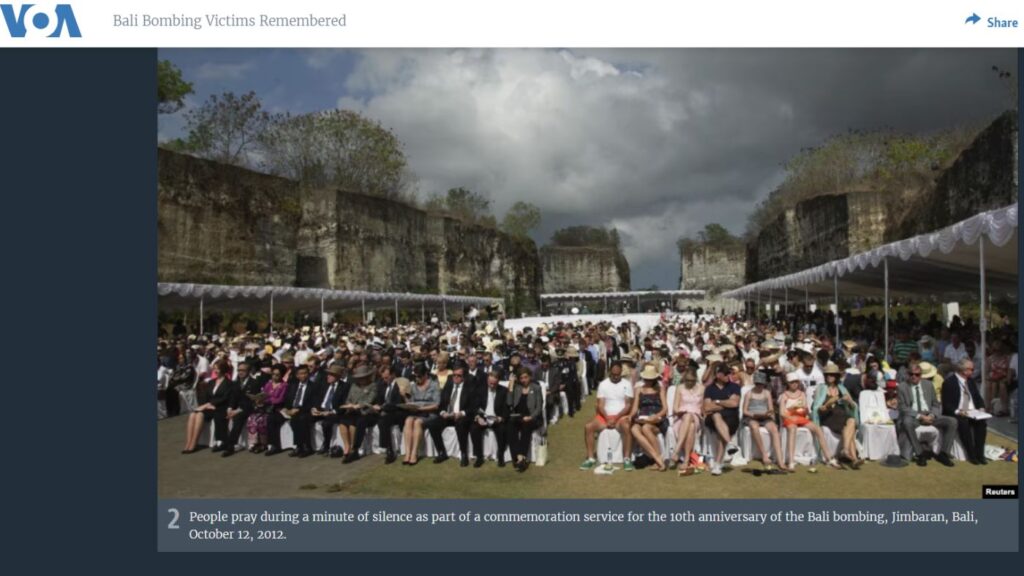
At 08:20 WITA, Governor Made Mangku Pastika officially opened the memorial service.
Many in attendance knew his connection to the tragedy extended far beyond protocol. In 2002, he had led the Indonesian investigation that identified the perpetrators of the bombings. Ten years later, families returning to Bali saw in him not only a governor, but someone closely tied to the island’s long journey through grief, recovery, and accountability.
Among the international dignitaries seated at the front of the venue were Australian Prime Minister Julia Gillard, former Prime Minister John Howard, Indonesian Foreign Minister Marty Natalegawa, Australian Opposition Leader Tony Abbott, and Australian Ambassador Greg Moriarty.
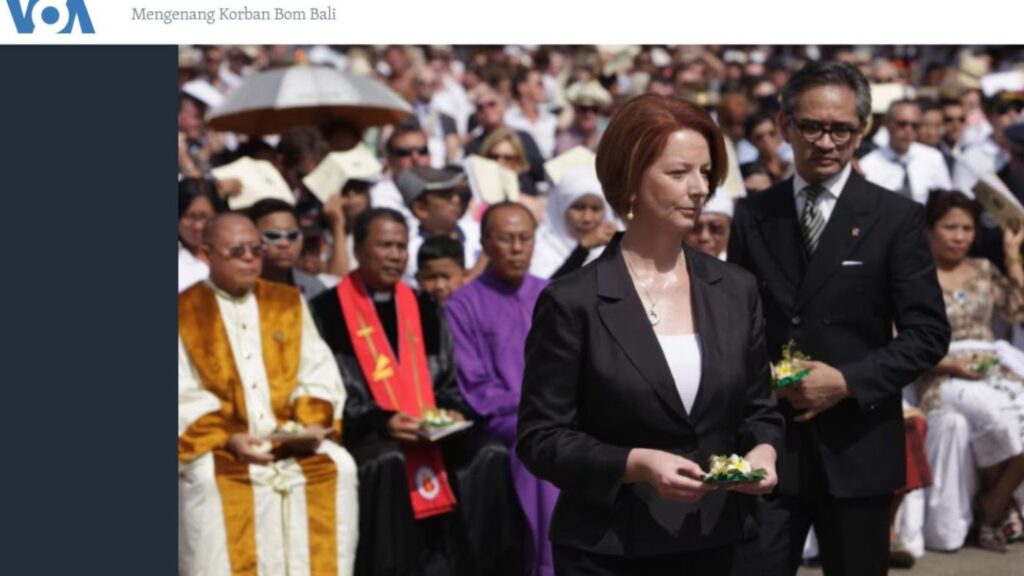
Yet the ceremony never became dominated by politics.
The program moved carefully between formal state remembrance and intimate moments of reflection. Chaplain Whitley guided the spiritual memorial service with gentle restraint, while Balinese gamelan musicians created a calm, grounded atmosphere throughout the morning.
The combination felt distinctly Balinese — respectful, communal, and quietly spiritual without separating people by culture or faith.
Twenty-Two Flames
Midway through the ceremony, 22 survivors and family representatives stepped forward together to light memorial candles representing the 22 nations affected by the attacks.
The movement toward the altar happened slowly and without announcement. One by one, candles were lit beneath the Garuda statue while the crowd watched in complete silence.
From the audience, the line of flames stretched across the altar like a map of shared loss — Australia, Indonesia, the United Kingdom, Germany, Japan, and many other countries connected by tragedy a decade earlier.
Some family members lowered their heads as the candles were lit. Others held tightly to the hands beside them.
No large screens or dramatic staging were needed. The simplicity of the moment carried its own weight.
When the Choir Began to Sing
For Bali Community Choir, the memorial demanded a different kind of performance.
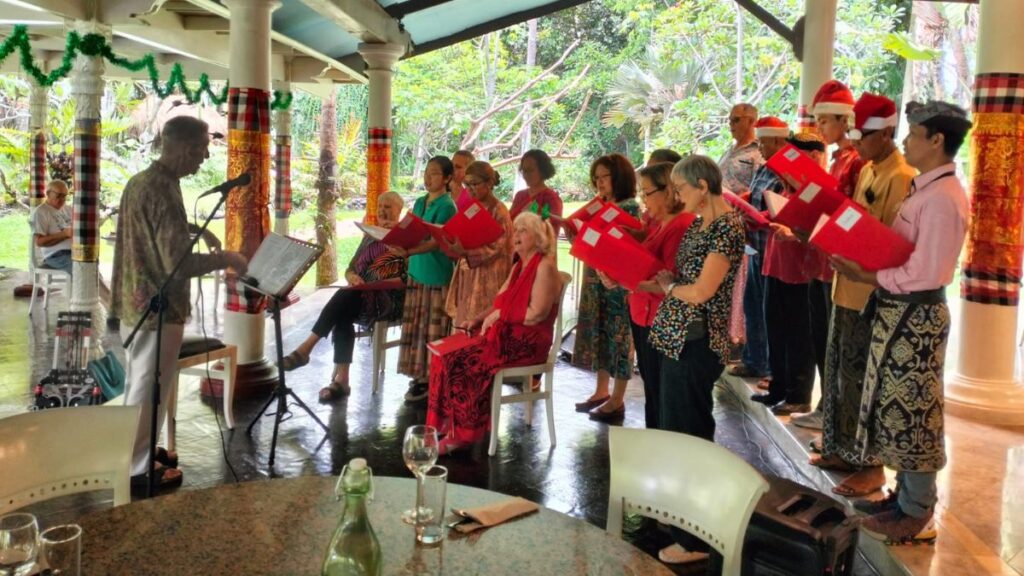
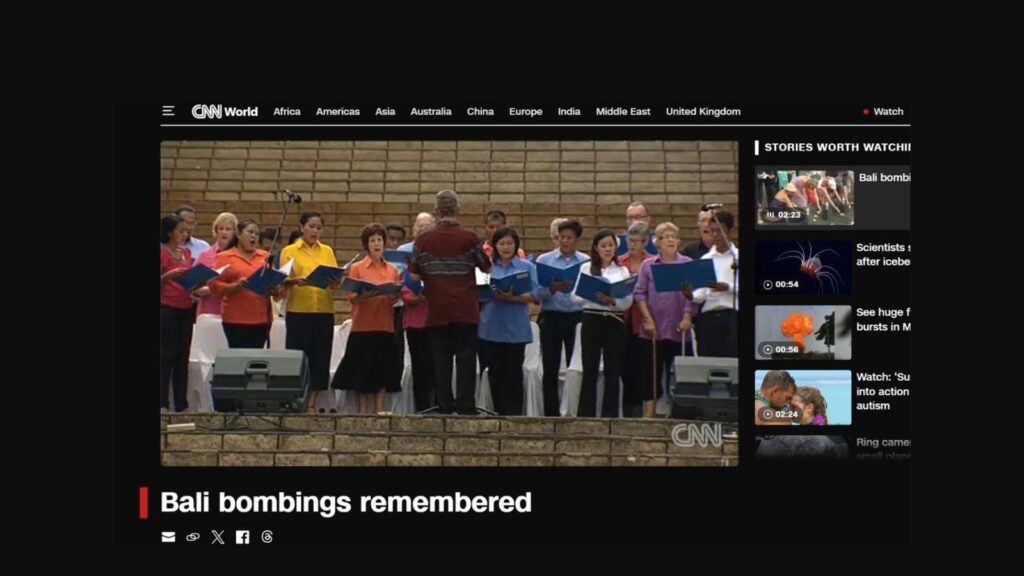
Under the direction of Brendan O’Donnell, the choir stood before the crowd to sing Amazing Grace. The ensemble itself reflected the community gathered that morning: local Balinese singers, Indonesian members, and expatriates from many different countries standing shoulder to shoulder.
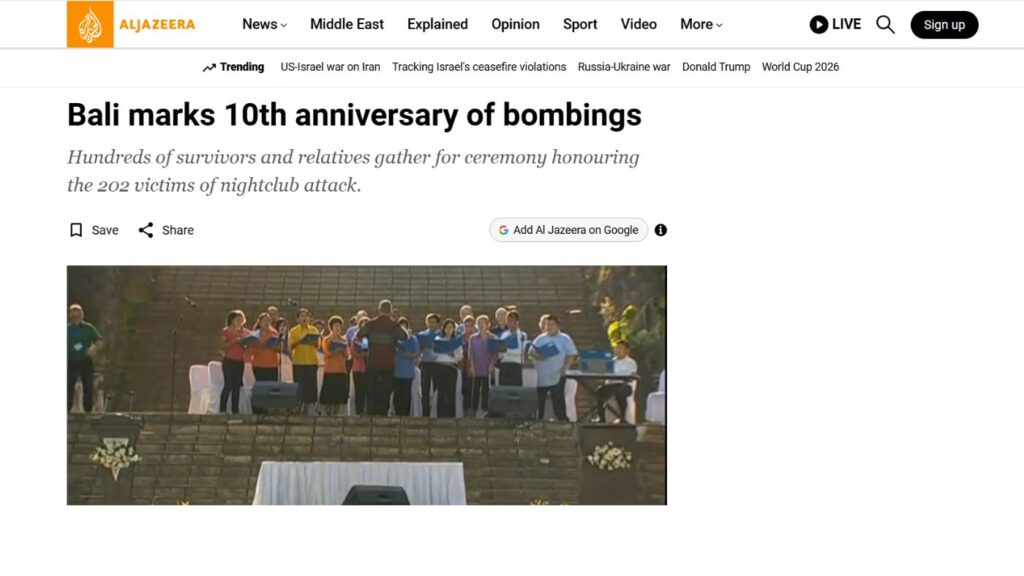
As the first notes rose through the Lotus Pond, the atmosphere inside the venue noticeably shifted.
The sound carried softly against the limestone walls while hundreds of people remained completely still. A woman seated near the front row reached for the hand of a stranger beside her. Several survivors closed their eyes. Others pressed folded tissues against their faces as they listened.
By the second verse, quiet sobbing could be heard throughout parts of the audience.
The performance resonated because it felt human and unguarded. There was no separation between performers and audience in that moment. The choir became part of the shared mourning unfolding across the venue.
For many families, it was one of the first times that morning they allowed themselves to fully break down emotionally.
The Reading of the Names
The emotional center of the memorial came with the reading of the names.
Four family representatives stood alongside former Australian Consuls and Deputy Consuls-General who had served in Bali during the aftermath of the attacks. Together, they began reading aloud the names of all 202 victims.
For more than twenty minutes, the Lotus Pond fell almost completely silent.
The only sounds were the readers’ voices, occasional birds overhead, and the movement of wind through the open limestone corridor surrounding the venue.
One by one, each name entered the space and disappeared again into silence.
Parents. Friends. Newlyweds. Young travelers. Workers. Musicians. Football players. Children.
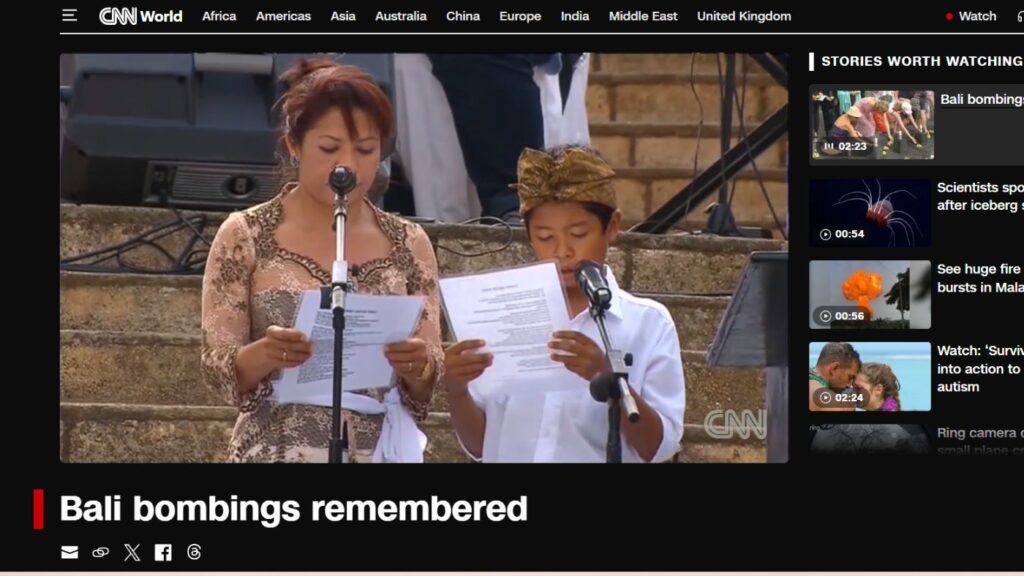
The reading transformed the scale of the tragedy into individual lives remembered publicly and carefully.
Many people in the audience stared down at their programs while listening. Others looked toward the altar without moving. Some openly wept.
The silence that followed the final name felt heavy enough that nobody immediately stood or applauded.
At the Lotus Pond
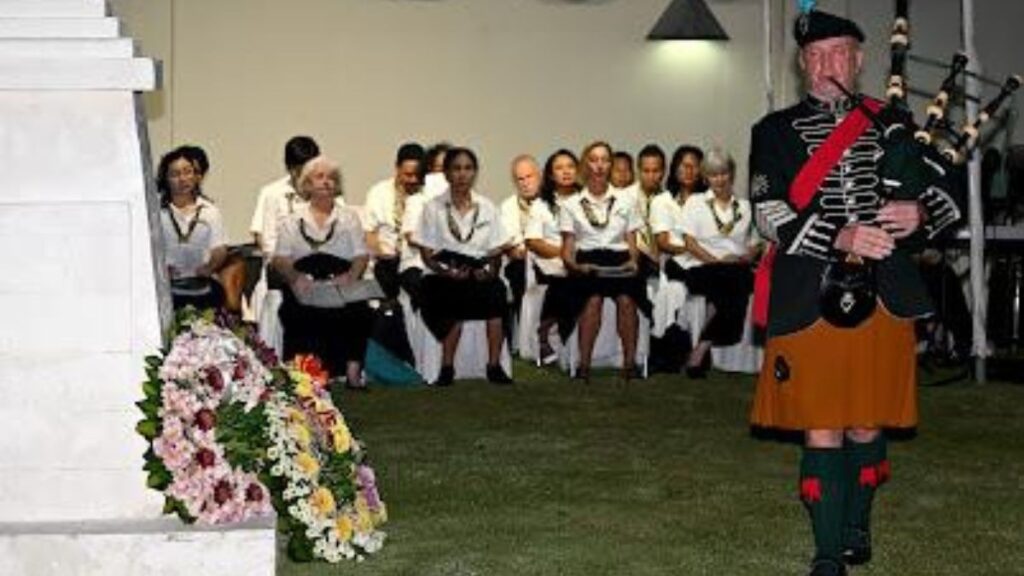
As the ceremony moved toward its conclusion, Indonesian and Australian dignitaries approached the candle-lit pool beneath the Garuda statue to lay floral tributes into the water.
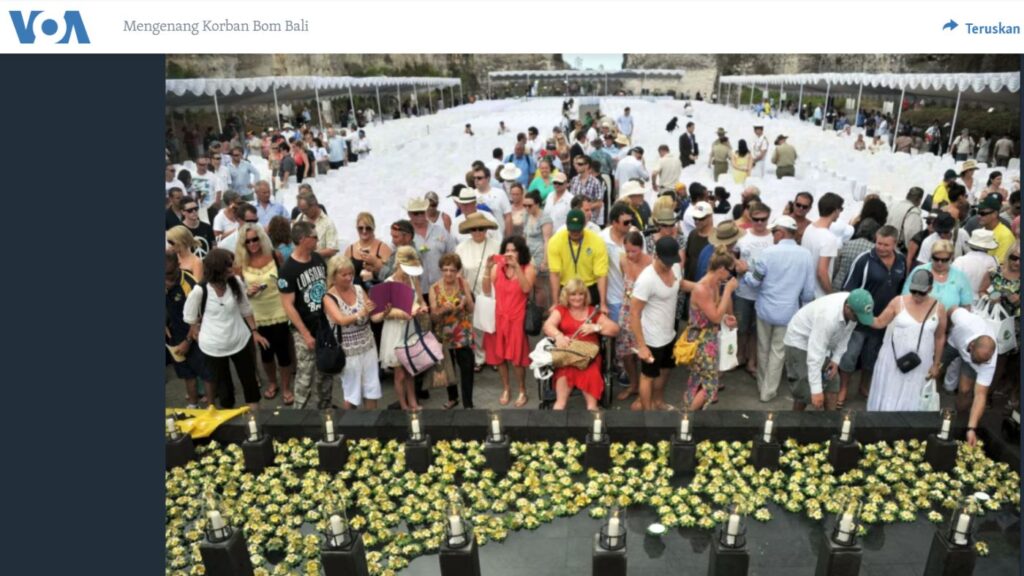
Candles reflected across the dark surface of the pool while photographers and security personnel quietly stepped back to give families space.
Then, slowly, the formality of the state ceremony began to dissolve.
After the officials departed from the altar, survivors and relatives gradually moved forward on their own. Families placed handwritten notes beside the candles. Some touched the water before stepping away. Others leaned against one another and cried openly on the stone steps surrounding the pond.
People who had never met before embraced as though they had known each other for years.
Long after the official program ended, groups remained seated throughout the Lotus Pond speaking softly, sharing memories, and comforting one another in small circles beneath the cliffs of GWK.
Music, Memory, and Community
For Bali Community Choir, participating in the memorial was not simply about singing at a major public event.
It was about helping hold a space for remembrance.
The choir’s presence reflected the wider Bali community that had carried the impact of the bombings long after international headlines faded — local families, tourism workers, expatriates, religious communities, emergency responders, and survivors whose lives remained connected through shared memory.
Ten years after the attacks, the memorial did not attempt to provide easy closure. Instead, it offered something quieter and perhaps more important: the chance for people from many nations and backgrounds to sit together, mourn together, and remind one another that grief does not have to be carried alone.
With Gratitude
Bali Community Choir extends heartfelt thanks to the survivors and families who entrusted the community with such a deeply personal day of remembrance.
We also acknowledge Governor Made Mangku Pastika, the team at GWK Cultural Park, Chaplain Whitley, the Balinese gamelan musicians, the international candle representatives, the name readers, the security and emergency personnel, and the many volunteers who helped create a safe and dignified space for all in attendance.
Above all, we remember the 202 individuals honored that morning.
Their memory continues to bring people together across cultures and generations in the shared hope for peace.